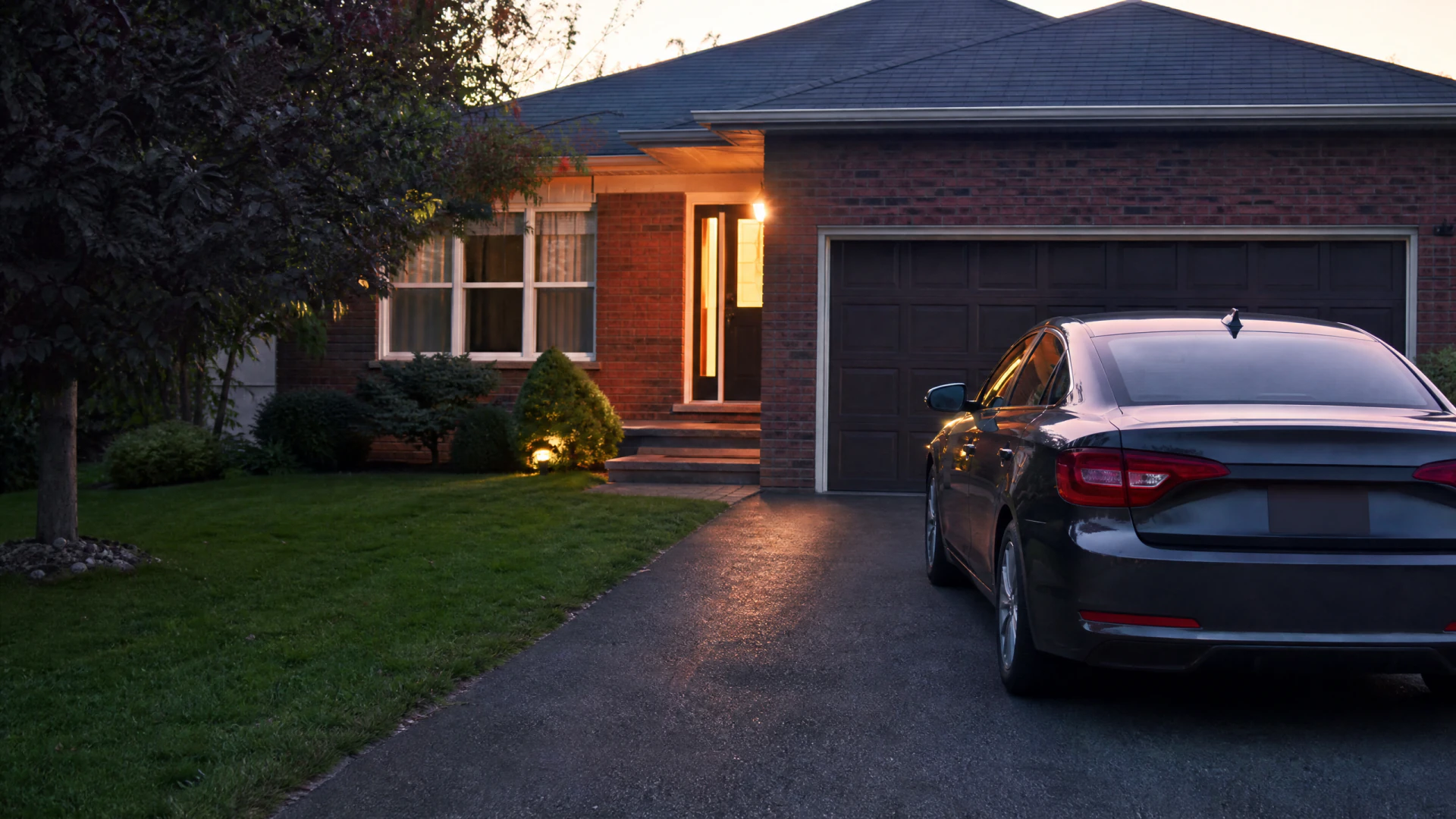
How Do I Find the Value of an Old Car
You find it by pulling multiple valuation sources and averaging them, since an old car's value is a range, not a fixed number.
Old cars don't have one true price, they have a range
A new car's value is easy to pin down because recent sales data is everywhere. An old car is different. Once a car passes a certain age, fewer identical ones sell, so pricing guides start relying on broader estimates instead of exact matches. That's why two valuation tools can give you numbers that are far apart for the same car.
The condition of the car matters more than its age. An older car that's been garaged, driven gently and kept up with maintenance can be worth noticeably more than the same model that's been left outside and neglected. Mileage, rust, interior wear and whether the original parts are intact all shift the number up or down.
Where the car is located and who's buying also change the price. A private sale usually brings in more than a trade-in, because a dealer has to resell it and account for their own margin. Regional demand matters too, a car that's common in one state might be harder to find in another, which pushes its local value up.
This matters for your parent's situation because insurance coverage on an old car is often tied to its value. If you're deciding whether to keep full coverage or drop to liability only, you need a realistic number first, not a guess based on what they paid for it decades ago.
Checking the value before changing the coverage
Say your parent's car is older, paid off, and they've mentioned maybe it's time to simplify the insurance. Before making that call, you look up the car using its year, make, model and mileage across a couple of different valuation tools. One gives a low number, one gives a higher one, so you take the car's actual condition into account, noting that it's been well maintained and garage kept, and settle on a value somewhere in the upper part of that range.
With that number in hand, you compare it to what full coverage would cost to maintain versus what the car would actually be worth if it were totaled. The value turns out to be high enough that keeping comprehensive and collision still makes sense for now. You make a note to recheck the value down the road, since the number will keep drifting as the car ages, and you move forward knowing the decision was based on something real instead of a guess.

Once you know what the car is really worth, compare quotes to see what coverage actually makes sense for it.

Do you check the value before changing coverage
If you do
You know whether dropping comprehensive or collision actually saves money relative to what you'd lose if the car were totaled. You can make the decision with your parent based on facts instead of assumptions, and you avoid either overpaying for coverage or leaving them underprotected.
If you don't
You're guessing based on the purchase price or a vague sense of the car's age, which usually doesn't match reality. You might keep paying for coverage that costs more than the car is worth, or cut coverage that still made sense, without realizing it until something happens.
What actually determines an old car's value
- Condition over age A well kept old car can be worth far more than a neglected one of the same year. Look at maintenance records, rust and interior wear before settling on a number.
- Mileage still counts Lower mileage usually means a higher value even on an older car. Check the odometer and compare it to what's typical for that model's age.
- Multiple sources, not one Different valuation tools can disagree by a meaningful margin on the same car. Check more than one and use the range, not a single figure, to guide your decision.
- Private sale versus trade-in A car sells for more privately than it does traded to a dealer. Decide which number matters based on whether you're setting insurance value or planning to sell.
- Location shifts demand The same car can be worth more or less depending on regional demand and availability. If you're near a state line or planning to sell out of state, check nearby markets too.
Should I drop full coverage once the car's value gets low?
Not automatically, and the value alone isn't the whole decision. Once you know what the car is worth, compare that number to what comprehensive and collision actually cost to maintain each year. If the potential payout in a total loss is close to or lower than what that coverage costs over time, dropping down to liability can make sense.
But consider your parent's full financial picture too. If replacing the car unexpectedly would be a real hardship for them, keeping some coverage might still be worth the cost even if the math is close. If they have savings set aside for exactly that kind of situation, dropping coverage becomes more reasonable. This is also worth revisiting periodically, since the car's value will keep declining and the right answer now might not be the right answer later on.